



CYCLING IN THE FAROE ISLANDS: EVERYTHING YOU NEED TO KNOW
Link Copied!

Guest article written and photos taken by Mila Colas, Le voyage à vélo, 2024.
The Faroe Islands, located in the North Atlantic between Iceland and Scotland, offer a unique and challenging cycling experience. While not the easiest place to cycle due to its steep terrain, unpredictable weather, and frequent tunnels, the breathtaking landscapes and quiet roads make it an incredible destination for adventurous cyclists.
Whether you're planning a bikepacking trip or a more relaxed cycling adventure combined with public transport, this guide covers the best routes, practical tips, and essential information for exploring the Faroe Islands by bike
Which islands to visit by bike?
All the islands of the Faroe Islands can be explored by bike, but reaching them requires careful planning. Some are accessible by road and undersea tunnels, while others require ferries. Not all tunnels are open to cyclists, so you may need to plan alternative routes or use public transport in some cases.
Focusing on those connected to Tórshavn, the capital, is a great way to explore the islands. This makes it easier to organise your trip without too much logistical complexity.
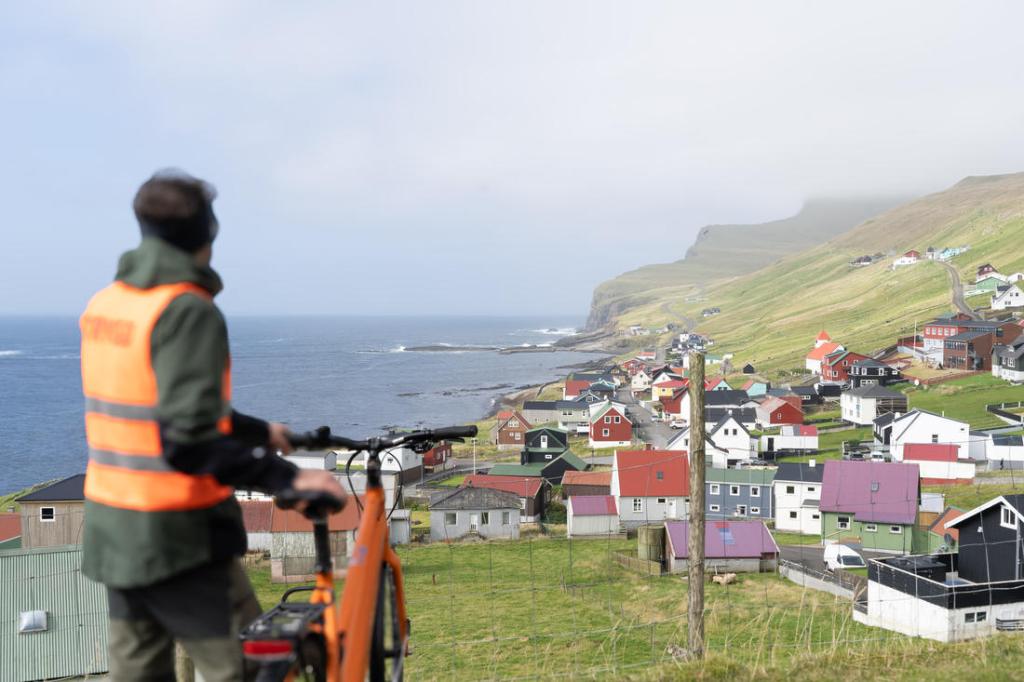
Enjoy your ride on Buttercup Roads
Cycling in Tórshavn and Kirkjubøur
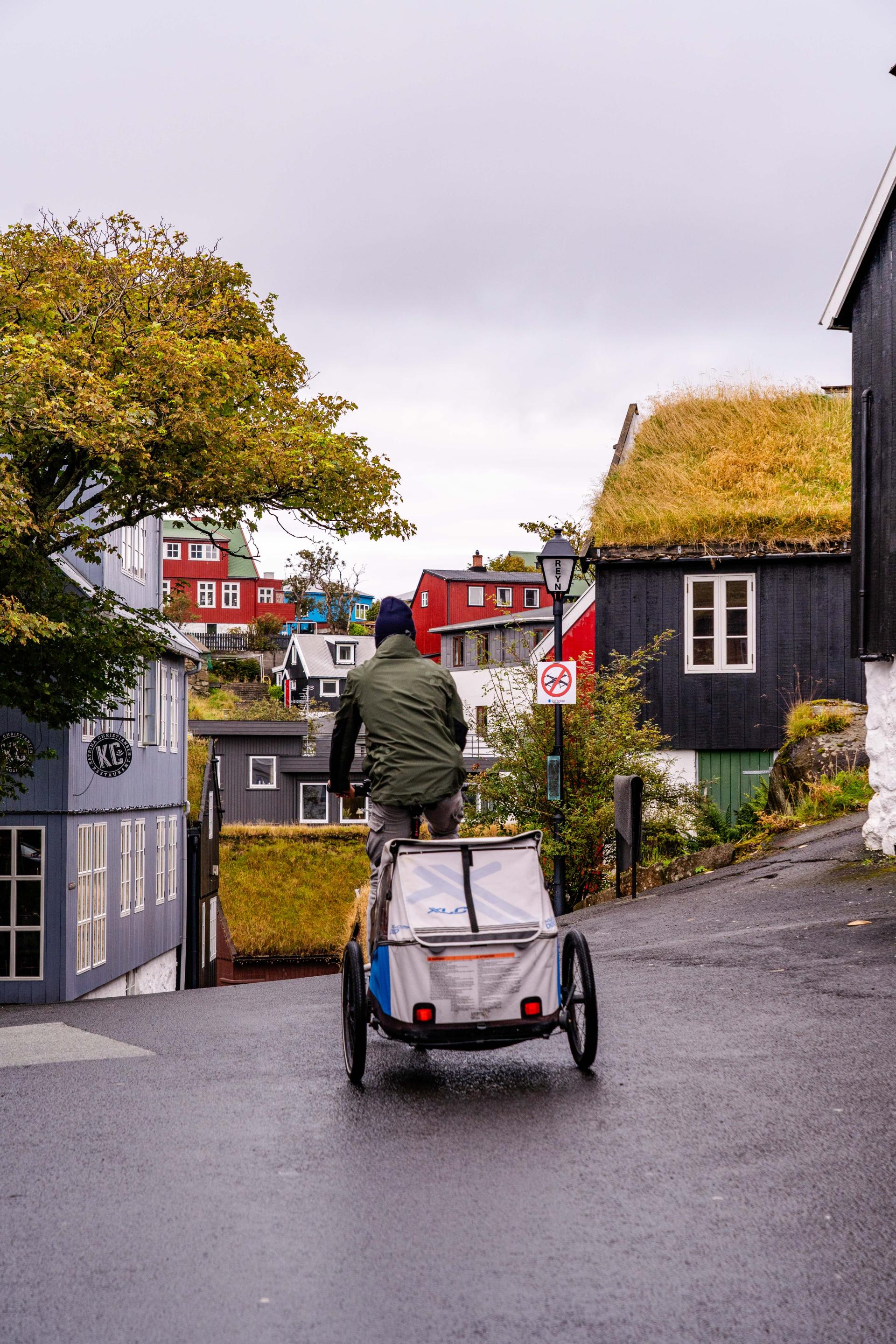
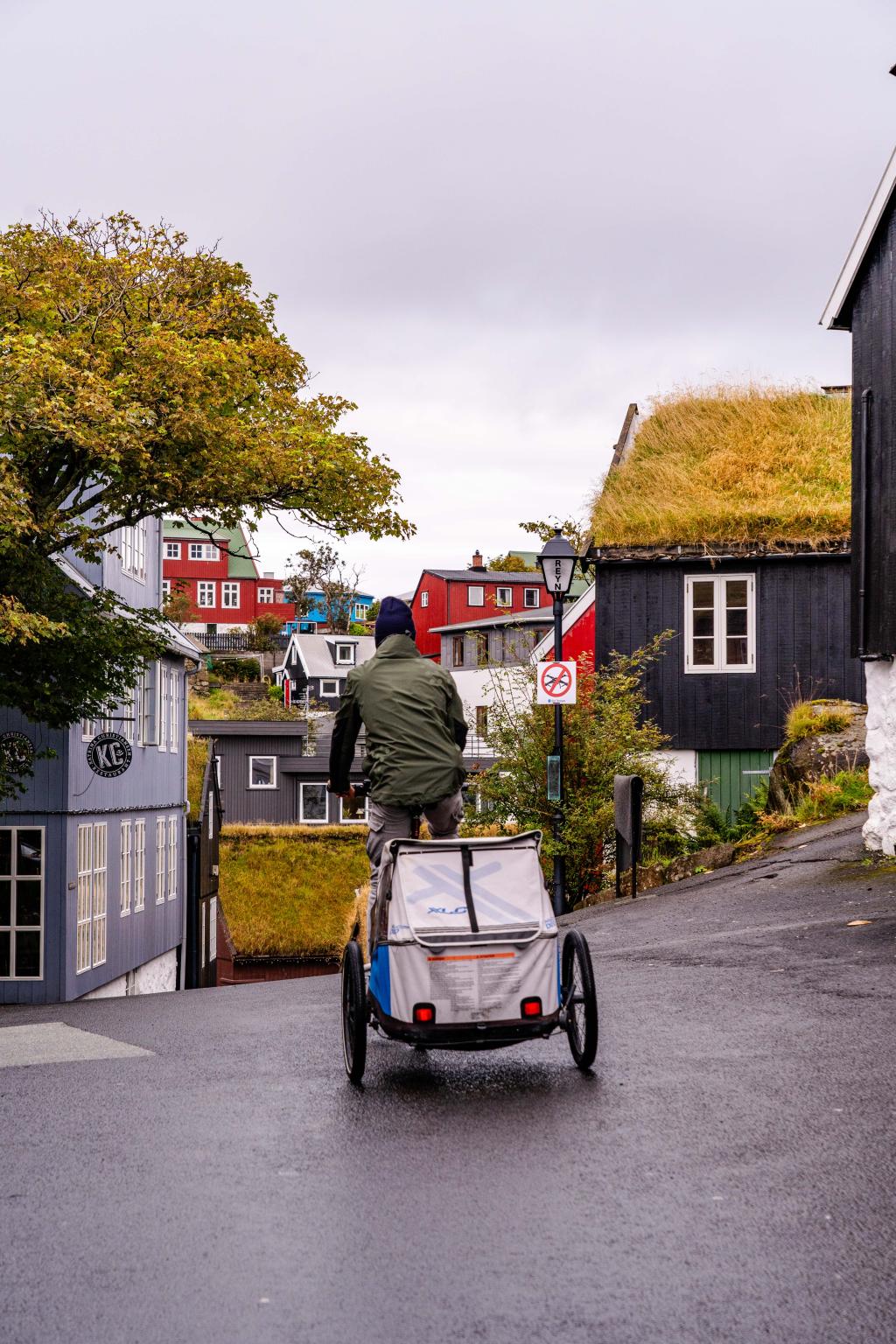
Tórshavn, the capital of the Faroe Islands, is a small but charming city that can be explored by bike and on foot. Although no dedicated bike lanes exist, traffic is generally manageable outside peak hours. However, the city is hilly, so expect some climbs.
Highlights of cycling in Tórshavn
- Skansin fortress – A 16th-century fort with great views of the city, harbour and islands.
- Tinganes – The historic quarter with well-preserved wooden houses and paved roads offers a romantic walk.
- Svartifoss waterfall – A peaceful spot along a scenic walking route.
A popular cycling loop from Tórshavn leads to Kirkjubøur, the oldest village in the Faroe Islands. The round trip is about 30 km, starting with a climb followed by a fast descent to the village.
In Kirkjubøur, you can visit Saint Olav’s church, one of the oldest in the islands, the unfinished Magnus Cathedral, and Roykstovan, a 900-year-old farmhouse.
On the way back, you can extend the ride by visiting Velbastaður, a village offering fantastic views of the fjords.
The buttercup road Oyggjarvegur
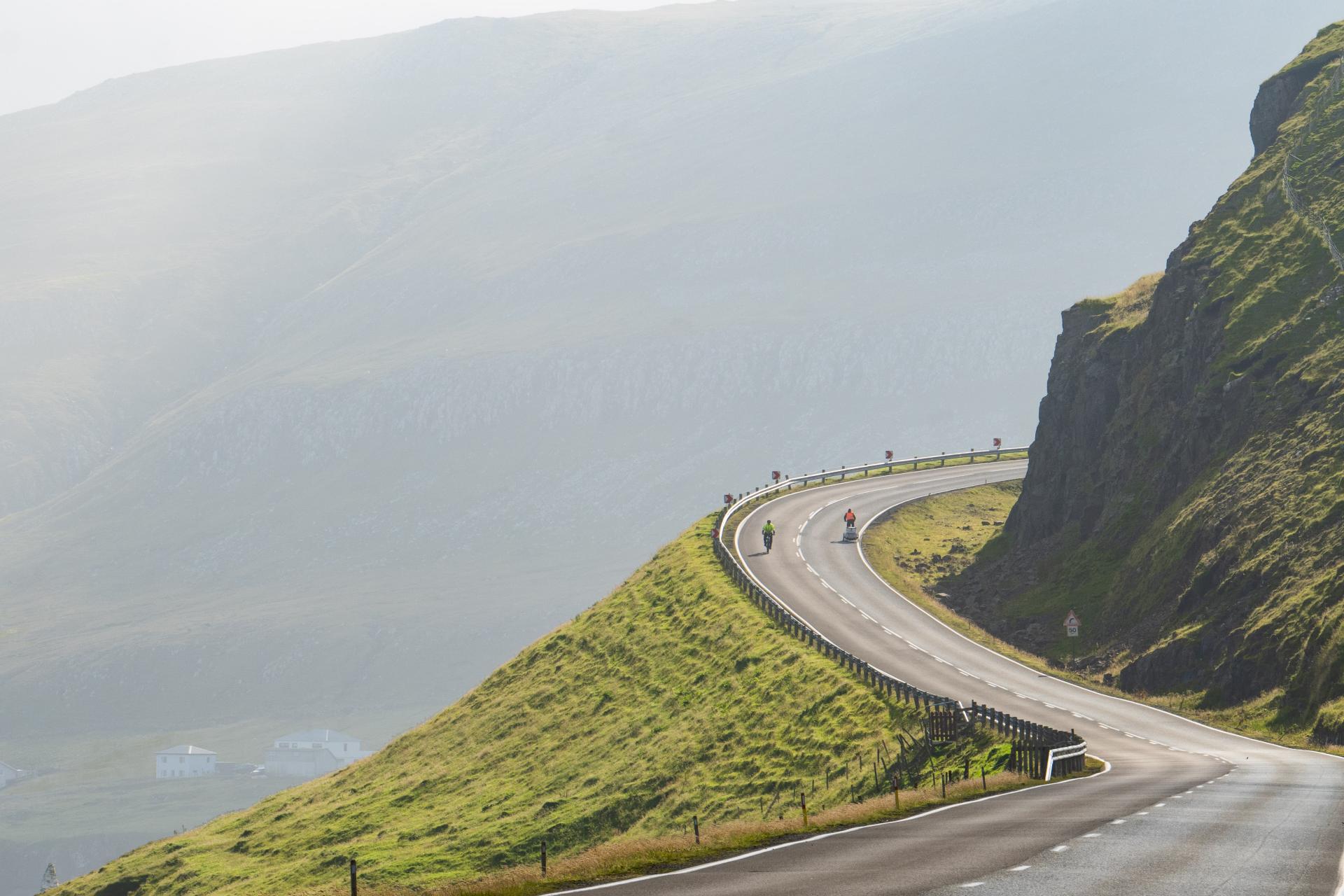
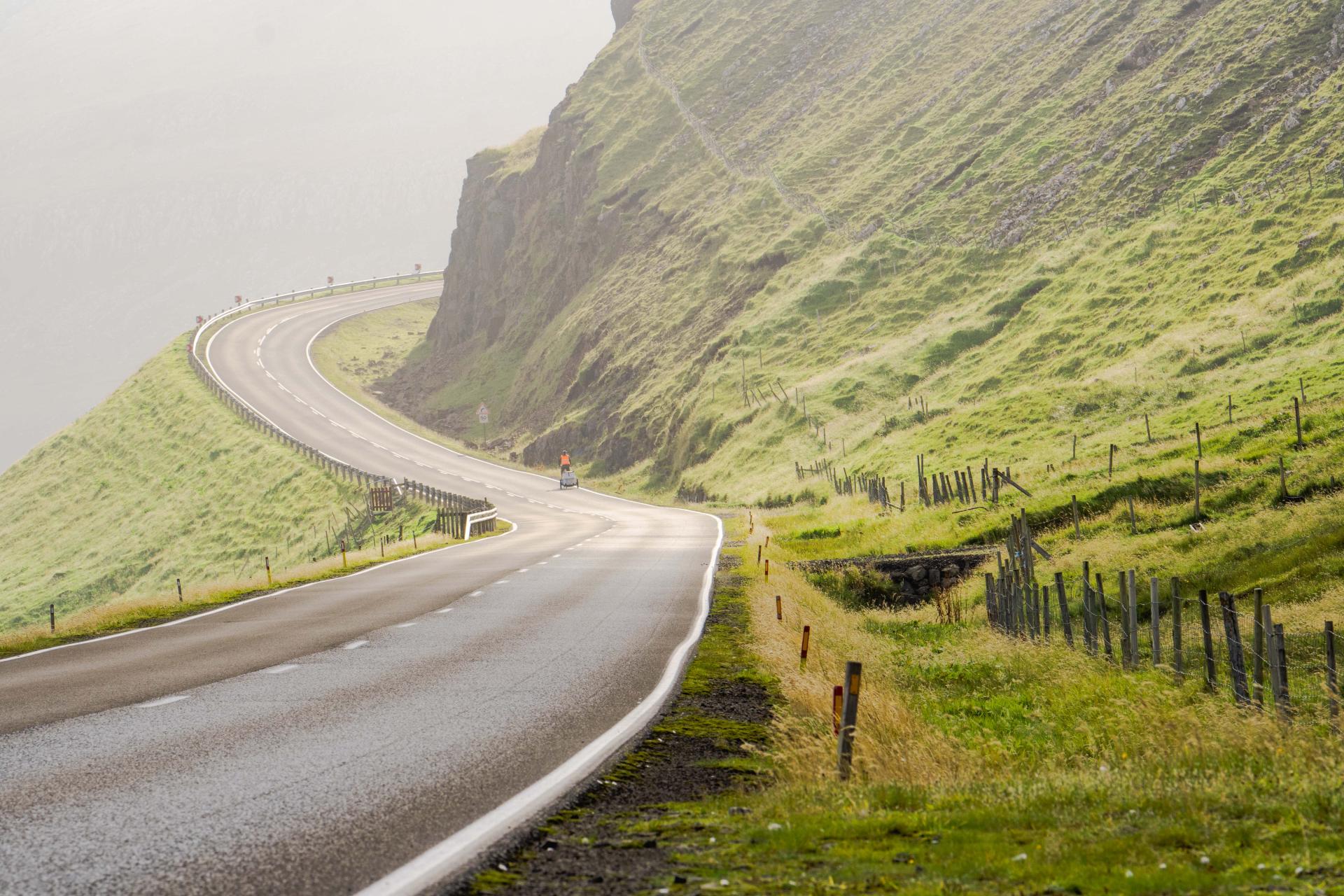
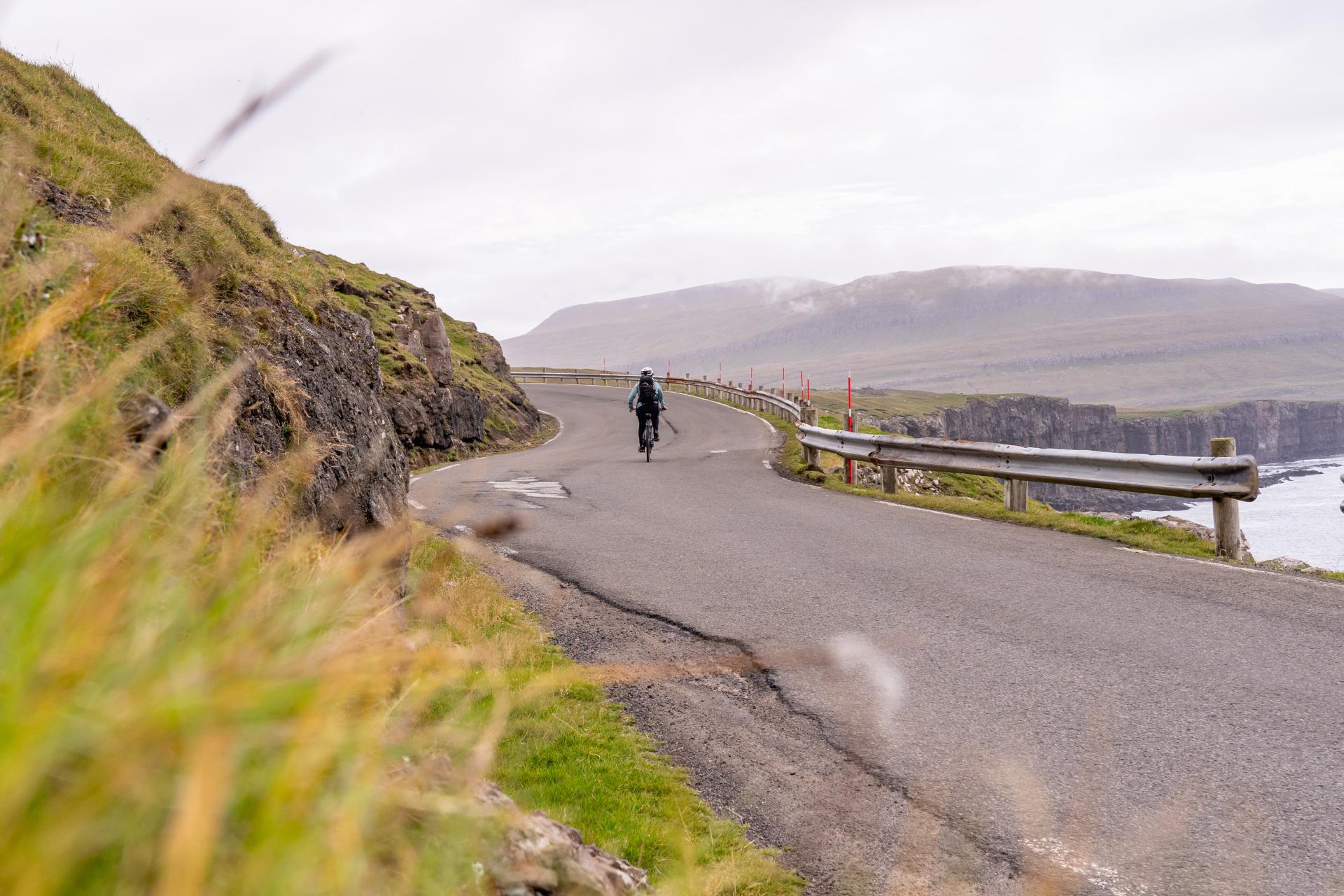
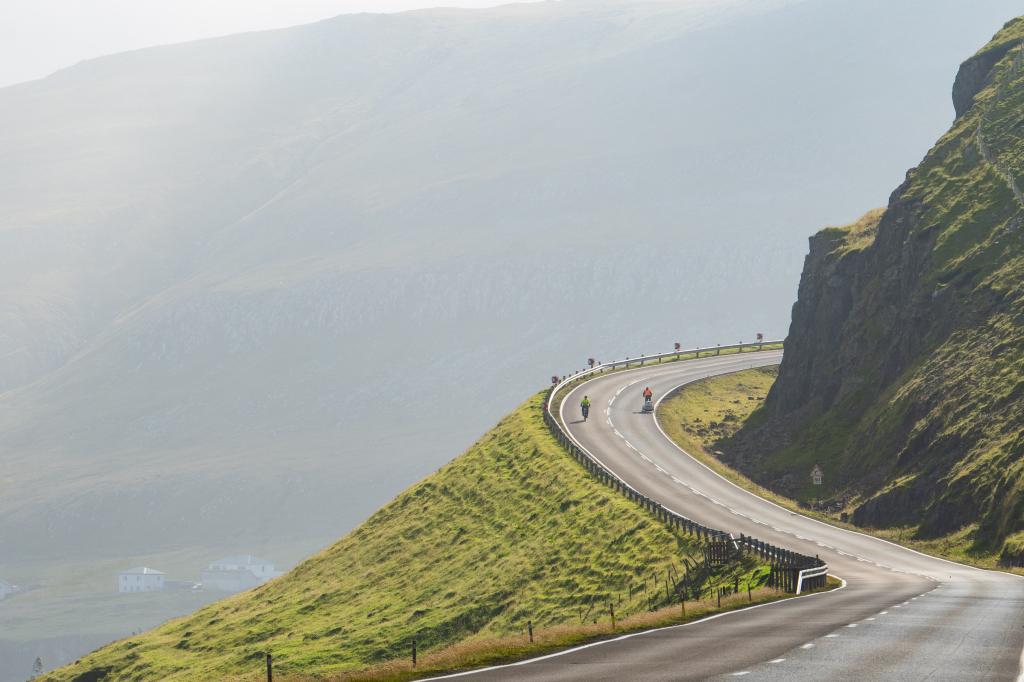
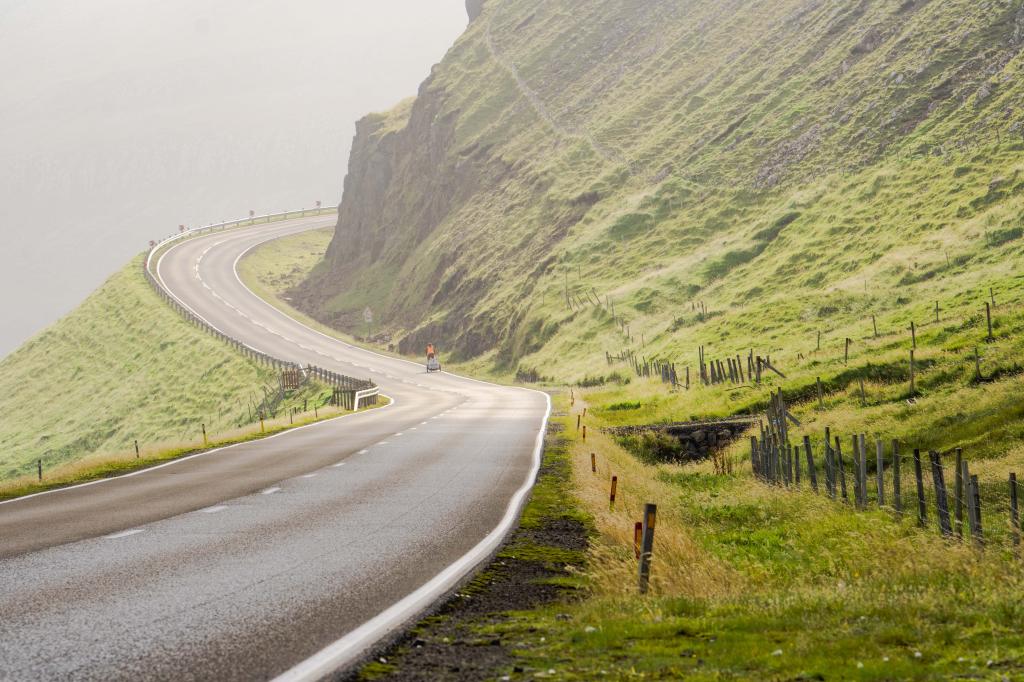
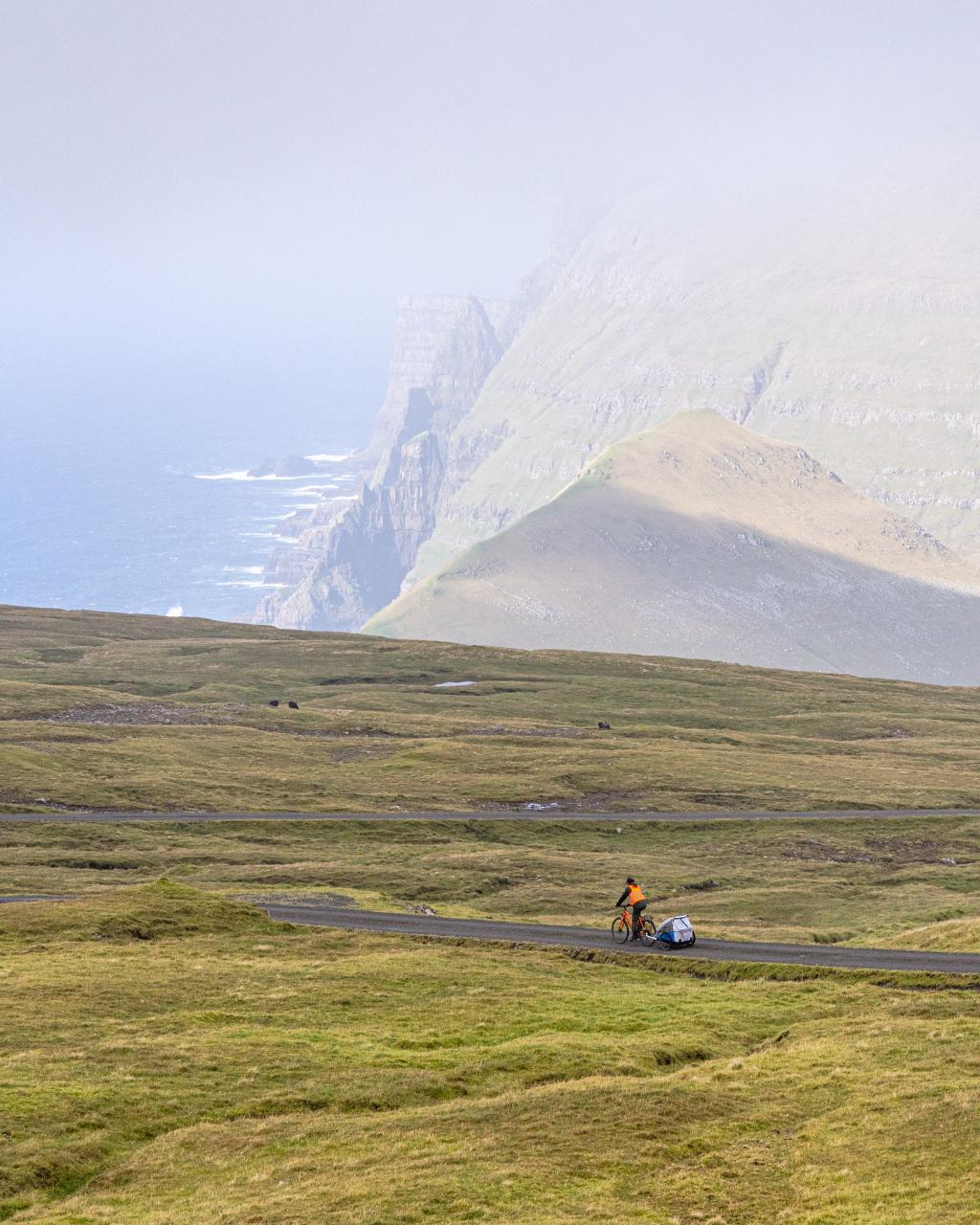
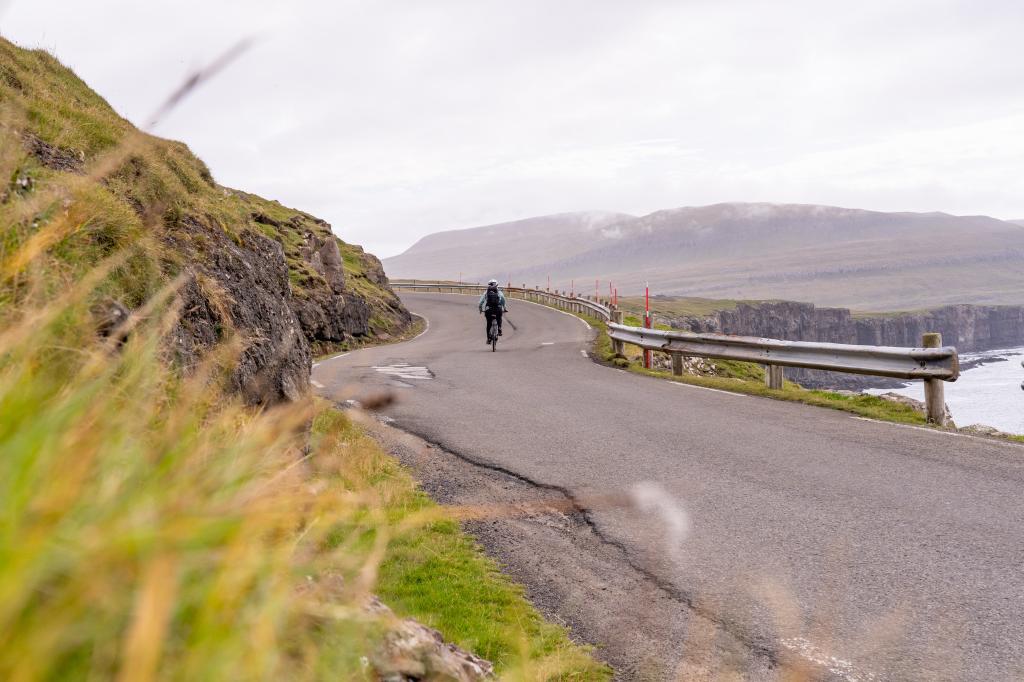
Oyggjarvegur, also known as a buttercup road, is a mountain route connecting Tórshavn to Kollafjørður. It is famous for its amazing landscapes and peaceful atmosphere. This old road, once the main connection between villages, has been replaced by faster tunnels, so it is now very quiet.
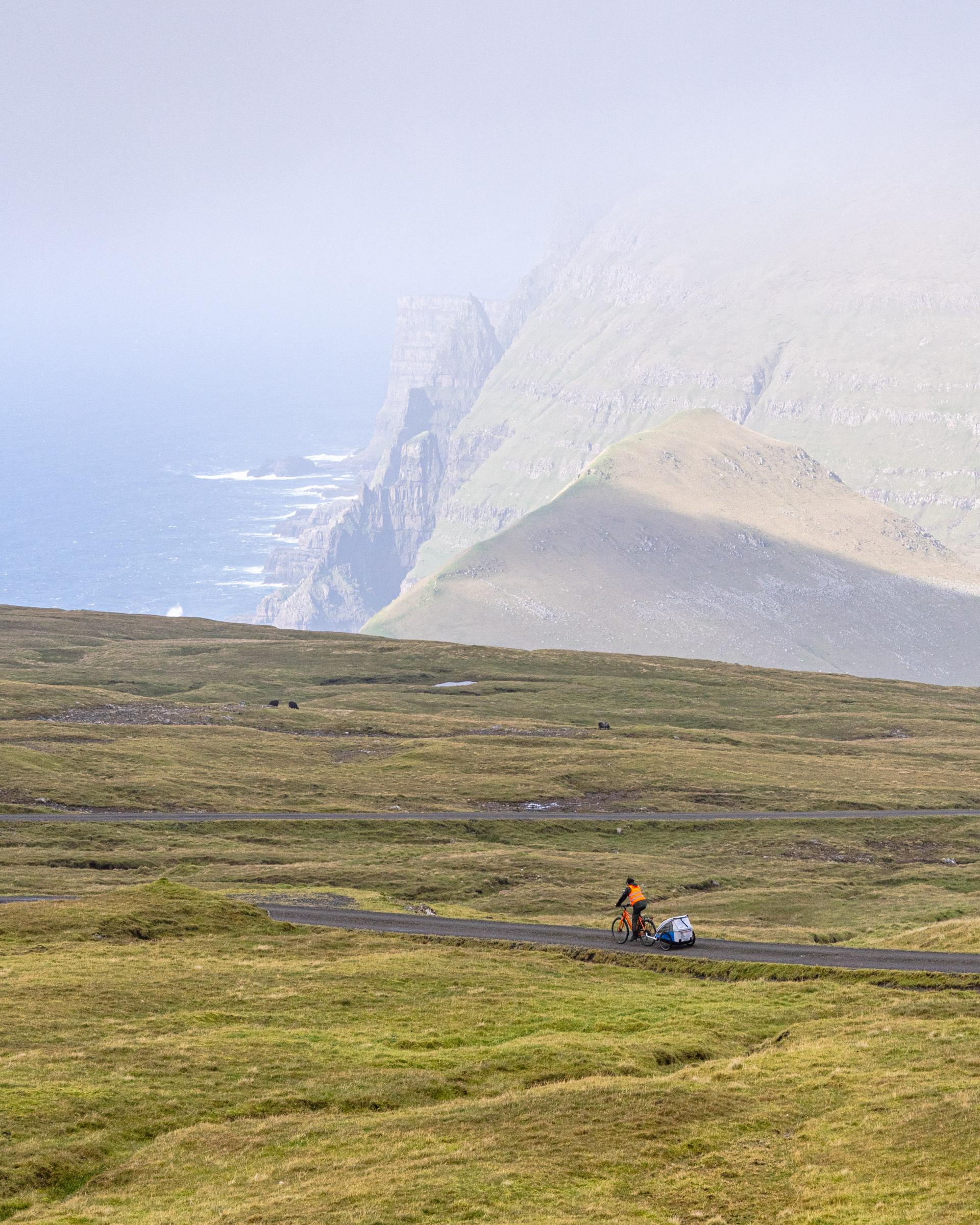
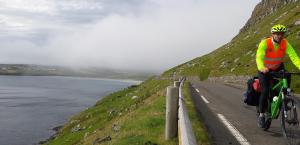
The weather on this road can be extreme, with strong winds and fog that reduce visibility. It is safer to ride it on clear days. In winter, snow and ice make it dangerous. Despite the challenges, the views make it worth the effort for experienced cyclists.
Cycling on Suðuroy: a remote and wild experience
Suðuroy, the southernmost island of the Faroes, is accessible by a two-hour ferry ride from Tórshavn. The island offers some of the most remote and breathtaking cycling routes.
Best cycling routes on Suðuroy
- Vágur to Akraberg lighthouse – A ride to the southernmost tip of the Faroe Islands, featuring dramatic ocean views.
- Vágur to Tvøroyri – A scenic road passing through traditional Faroese villages.
It is also easy to stay in the pleasant village of Vágur, which makes a great base to explore the island. You can admire the spectacular Beinisvørð cliffs, rising almost 470 meters above the sea from there. These cliffs offer one of the most breathtaking views in the Faroe Islands and are a perfect reward after a day of cycling.
Cycling in Suðuroy requires preparation due to the strong winds and challenging climbs. However, the island’s untouched landscapes make it one of the most rewarding places to cycle in the Faroes. You will enjoy it a lot!
Cycling on Sandoy: a perfect destination for a gravel adventure
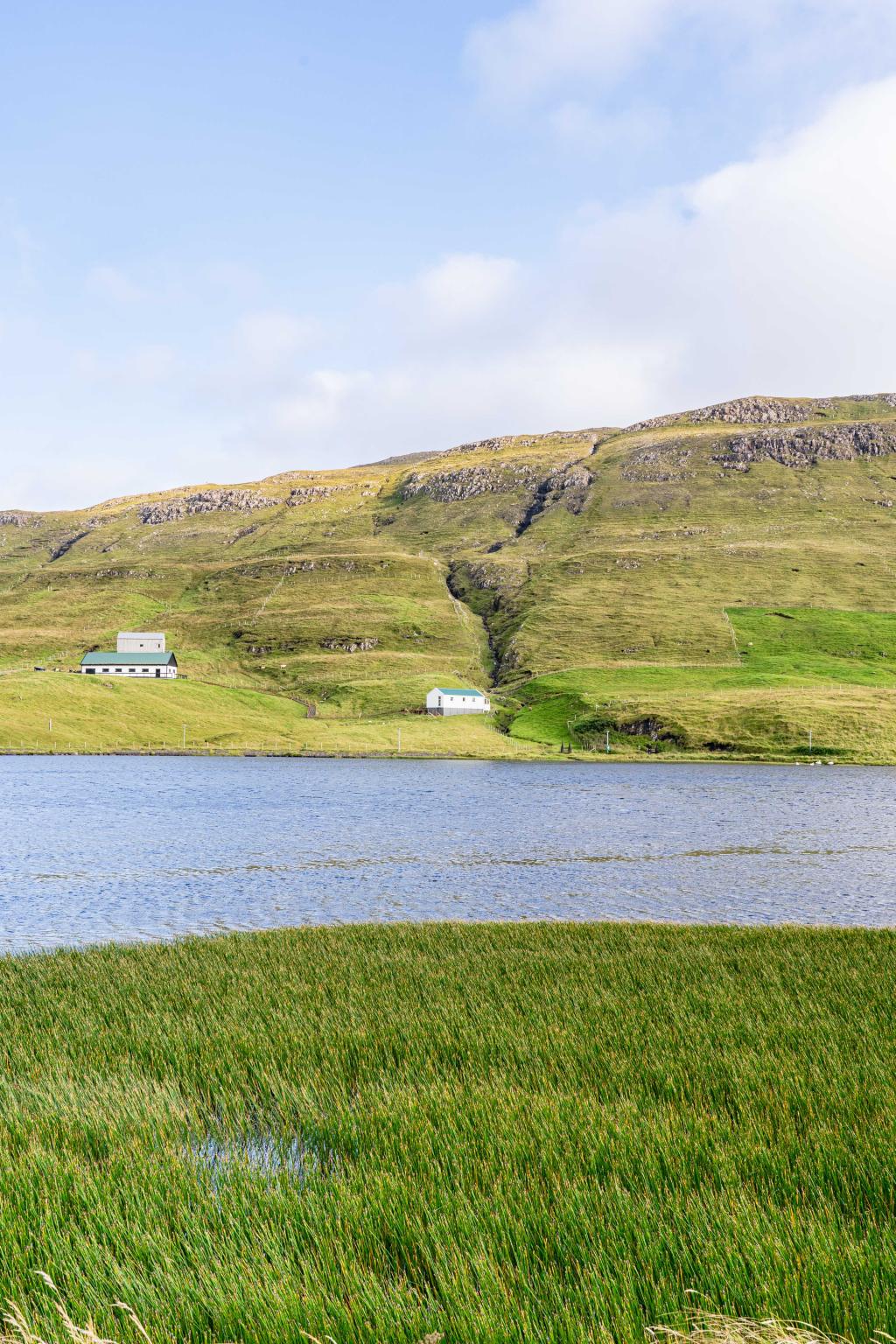
Sandoy is one of the Faroes' flattest islands, but remember that “flat” here still means some climbing. It is a great option for gravel bike enthusiasts. The island is accessible by a direct bus from Tórshavn’s harbour and offers quieter, less technical routes than other islands.
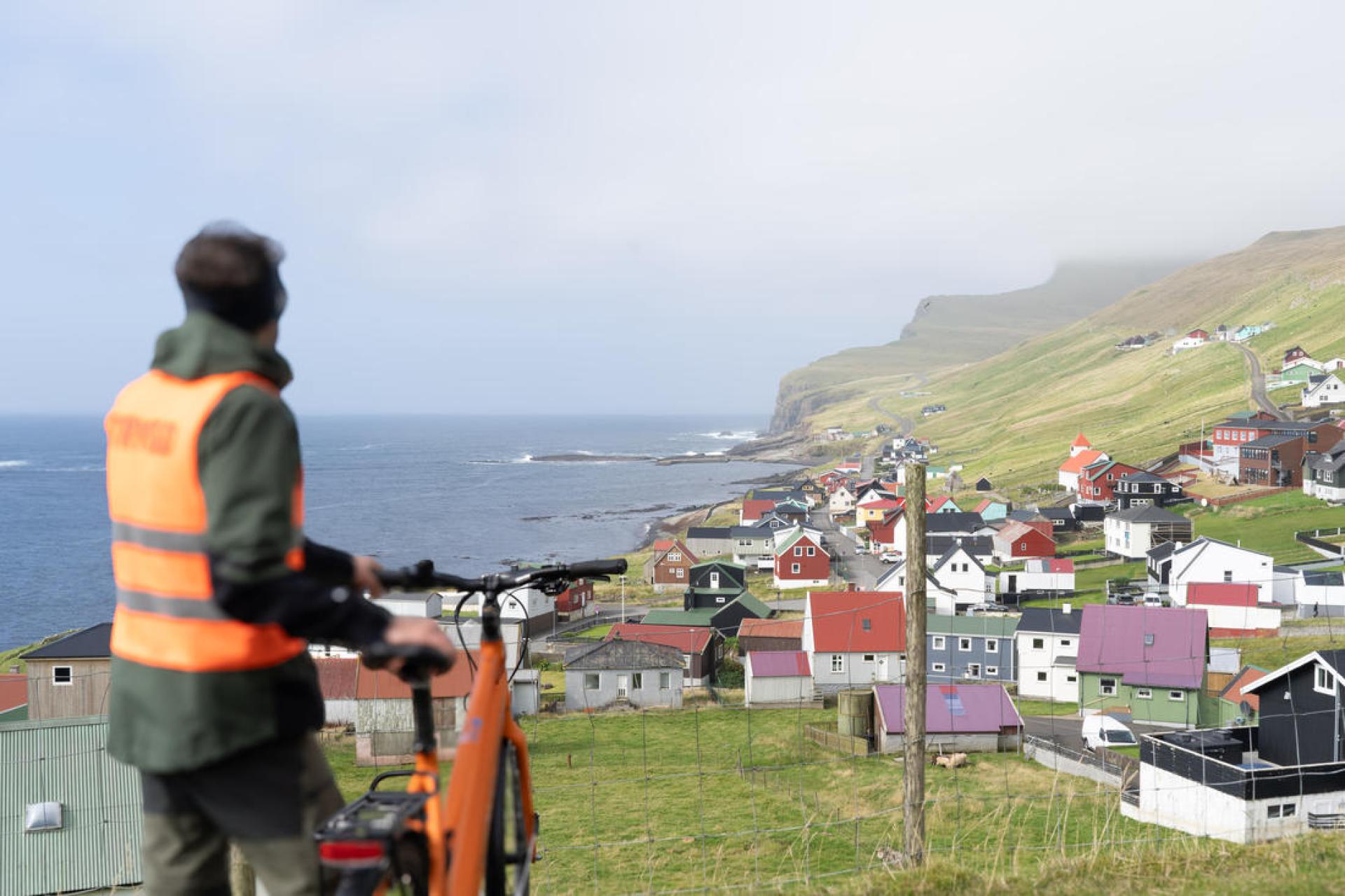
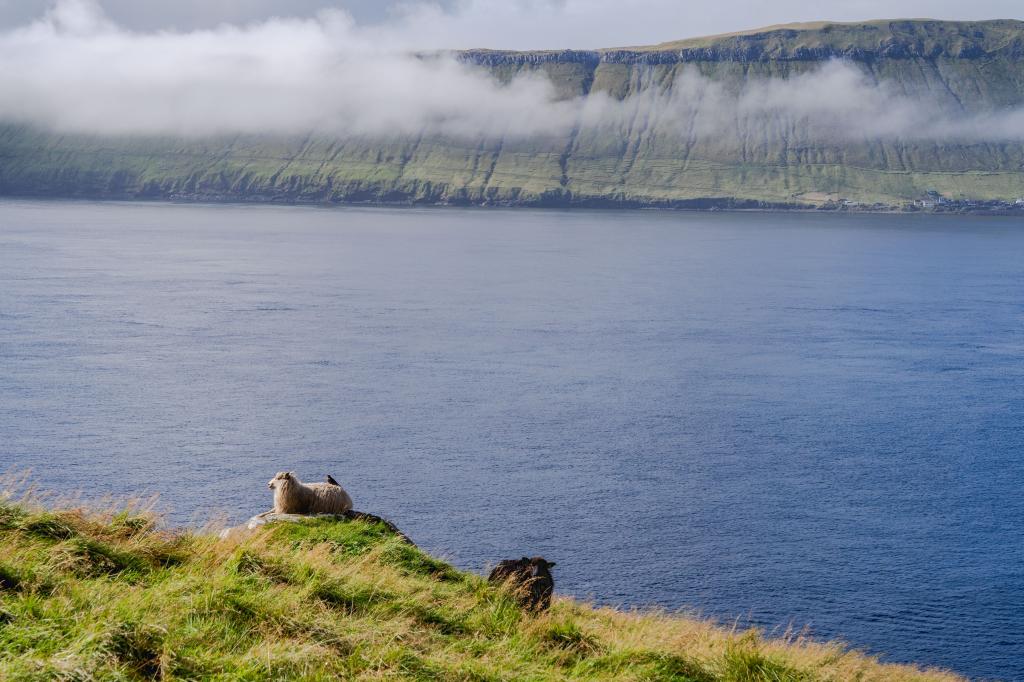
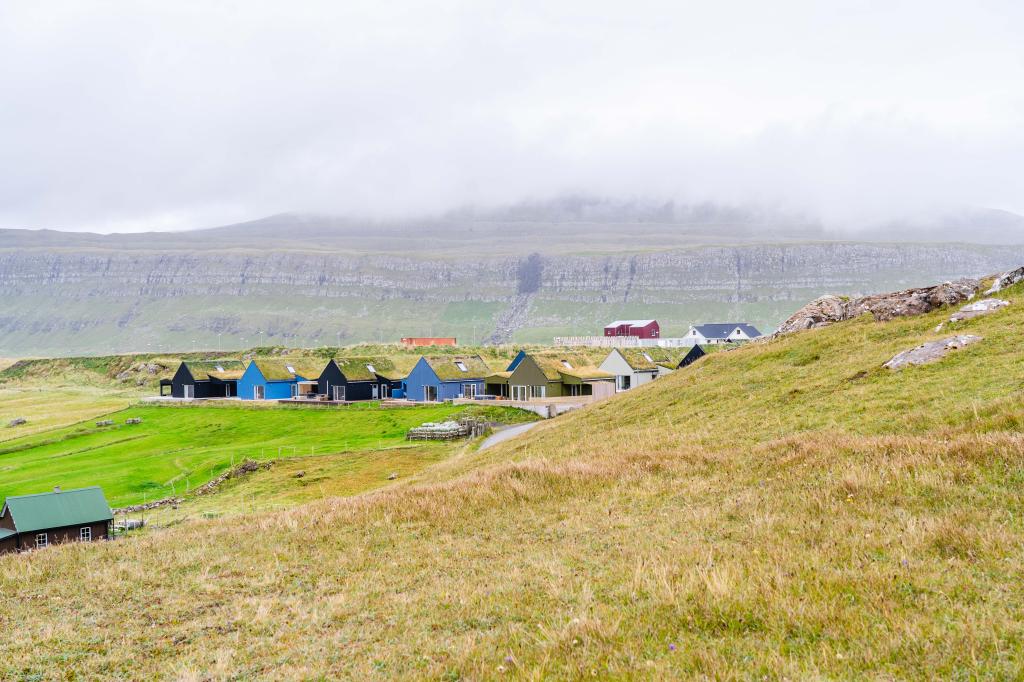
Among the highlights are the villages of Skálavík, Húsavík, and Dalur. Spectacular cliffs surround these wooden villages and offer stunning views of the ocean.
Practical information for cycling in the Faroe Islands
Best type of bikes for the Faroe Islands
The choice of bike can significantly impact the experience of cycling in the Faroe Islands. Due to the challenging terrain and weather conditions, the best options include:
- E-bikes: a great choice for tackling steep climbs, but their battery autonomy may be greatly affected by climbing, cold temperatures, and strong winds.
- Gravel bikes: ideal for mixed-terrain routes and more remote areas.
- Touring bikes: suitable for paved and gravel roads, but a lightweight setup is better to handle the climbs
Where to rent a bike
Rentabike.fo in Tórshavn offers a variety of good-quality bikes, including e-bikes, gravel, mountain, and road bikes.
Essential gear for cycling in the Faroe Islands
Due to rapidly changing weather conditions, cyclists should be well-prepared. Essential gear includes:
- A waterproof and windproof jacket
- Gloves and layered clothing for insulation
- Bright lights and reflective gear for tunnels and foggy conditions
- Waterproof panniers or bikepacking bags to keep gear dry
When should you visit the Faroe Islands by bike?
The best time to cycle in the Faroe Islands is mid-June to mid-September. Outside this period, temperatures drop, and snow may occur.
How do you get to the Faroe Islands by bike?
Travelling to the Faroe Islands with a bike can be done by:
- Direct flights from London, Paris, Copenhagen, and Barcelona to Vágar with Atlantic Airways. Bikes must be packed in a transport bag. E-bikes are not allowed on flights.
- Ferry from Denmark or Iceland – The ferry allows bicycles, trailers, and e-bikes, making it a more flexible option for bike travellers.
Cycling in the Faroe Islands: what to expect
Cycling in the Faroe Islands is a truly unique and unforgettable experience. The quiet roads, breathtaking scenery, and encounters with wild and untouched nature make it an ideal
destination for adventurous cyclists. The lack of heavy traffic means many routes feel peaceful, and the ever-present ocean views, dramatic cliffs, and green valleys create an inspiring backdrop for every ride. Plus, meeting friendly locals in small villages along the way adds a human dimension to the journey.
However, to fully enjoy cycling here, it’s important to be aware of some challenges and prepare accordingly.
- Steep climbs: the highest point in the Faroes reaches 880 m, and many roads have sharp inclines. Riders should be ready for significant elevation gains.
- Strong winds: winds can be fierce, especially on exposed sections and coastal routes, sometimes making progress slow and exhausting.
- Rapidly changing weather: It’s common to experience rain, sunshine, fog, and wind all within the same hour, so cyclists must be ready to adapt to shifting conditions at any moment. Waterproof, windproof, and light summer clothing are essentials.
- Limited secondary roads: as the islands are small and mountainous, many routes are linear rather than circular, meaning you’ll often need to return on the same road.
- Tunnels: Some tunnels, particularly the longer and underwater ones, are prohibited to cyclists. When this happens, it's crucial to plan ahead and consider ferries or buses as alternatives.
Final thoughts on cycling in the Faroe Islands
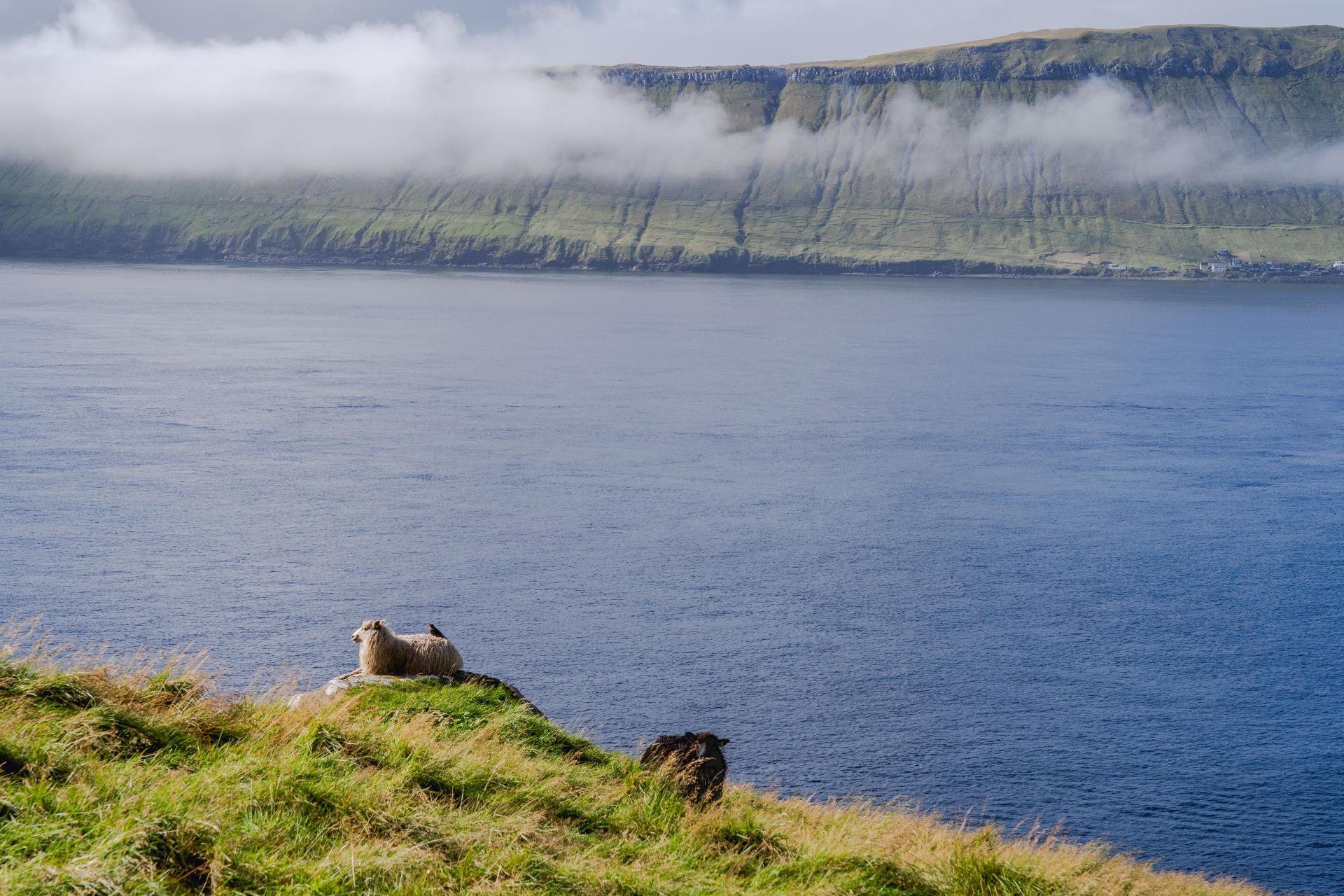
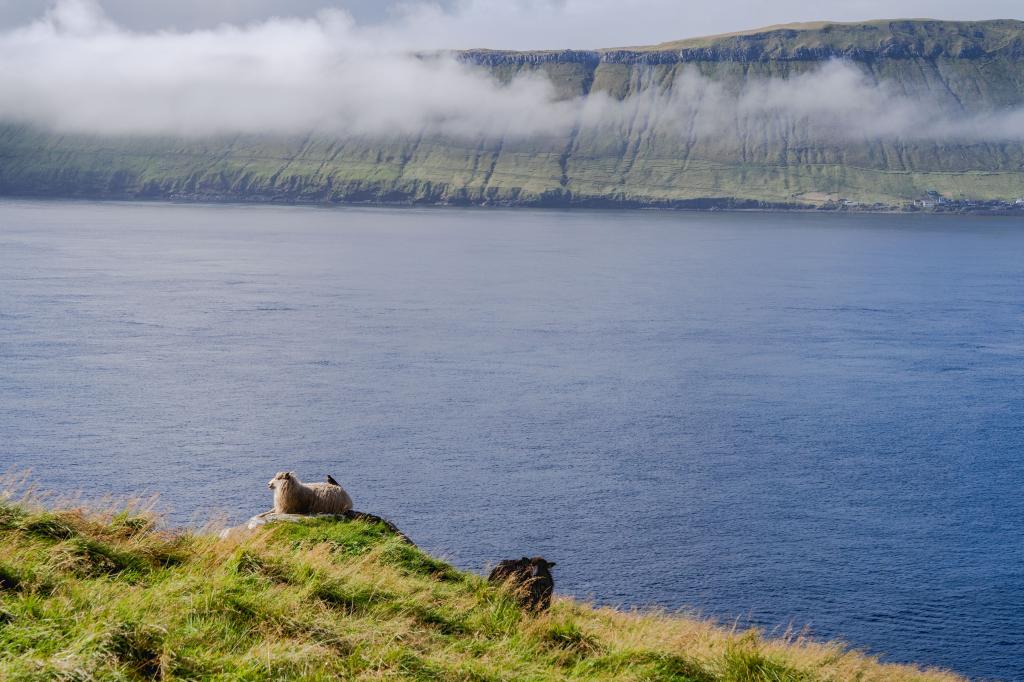
Despite the challenges, cycling in the Faroe Islands is an unforgettable and deeply rewarding adventure. Few places in the world offer such a combination of wild, unspoiled landscapes and peaceful roads. Every turn reveals a new breathtaking view whether it’s sheer cliffs plunging into the ocean, emerald-green valleys dotted with sheep or charming colorful villages nestled at the foot of dramatic mountains.
One of the most special aspects of cycling here is the feeling of solitude and connection with nature. Often, you’ll find yourself riding for miles without seeing another soul, surrounded only by the sound of the wind and the cries of seabirds. When the sun breaks through the clouds after a rain shower, lighting up the cliffs and sea, the landscapes become almost otherworldly. Those moments make all the effort worthwhile.
Encounters with locals also bring warmth to the journey like a chat with a shopkeeper in a remote village or sharing a meal of traditional Faroese food in a family.
To fully enjoy the Faroe Islands by bike, a mix of cycling, hiking and ferry travel is ideal. This allows you to explore different islands, take in panoramic views from mountaintops, and reach the most scenic spots.
For those seeking a wild, scenic, and soul-stirring cycling journey, the Faroe Islands are a truly remarkable destination. This is a place where adventure meets beauty and where every effort is rewarded with unforgettable memories.
Family-Friendly Faroes

Uncovering a different side to the Faroe Islands
Tórshavn marathon
The food culture of the Faroe Islands
The Faroe Islands... through the eyes of a New Yorker
Fog with a chance of hihing in the Faroe Islands
Discovering the Faroe Islands by bicycle
Best things to do in the Faroe Islands
Suðuroy: A hikers's haven
Autumn with Kids